

The Plausibility Machine
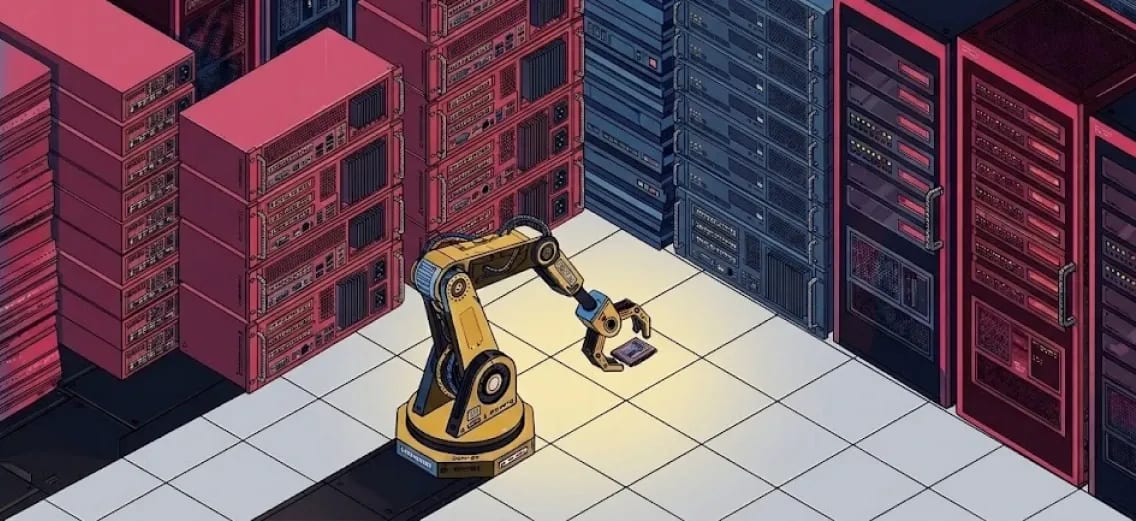
On what happens to a mind built to trust what looks right when looking right becomes free
Damian Fozard
Smoke Without Fire
On the morning of 22 May 2023, a photograph appeared on social media showing black smoke rising beside a large official building. The caption said there had been an explosion near the Pentagon. The account that posted it carried a blue verification tick and a name resembling that of a news organisation, and within minutes the picture had been passed along by accounts with millions of followers and picked up by broadcasters abroad. US stocks dipped briefly. Then the local fire department posted a message saying there was no explosion, no smoke and nothing to attend, and anyone who enlarged the photograph could see that the building was not quite the Pentagon, the fence melted into the pavement, and the smoke came from nowhere. The image was AI-generated. Whoever made it needed little skill, access or money, and for several minutes their picture helped move the largest financial market on Earth.
A false belief was engineered, distributed, amplified and granted a borrowed respectability, all in a matter of minutes. To see why this is new, and what remains old, take the machine apart.
The Price of Plausibility
For most of human history, producing a convincing falsehood required time, skill, access or money. The Donation of Constantine, by which a Roman emperor supposedly granted the Pope dominion over the Western world, required a skilled forger writing careful Latin, and it kept its authority for centuries, until around 1440 the scholar Lorenzo Valla examined that Latin and found vocabulary that did not belong to the period it claimed to come from. Faking took craft, and catching fakes took craft. The economics held into living memory. Peter Popoff, the televangelist whose miraculous knowledge of his audience’s ailments turned out to come from a radio earpiece, needed a staff, a transmitter and a broadcast slot. Belle Gibson, the wellness influencer who built a business on a cancer she never had, needed only a phone, but she still needed months of sustained, risky lying. Effort placed a practical limit on deception, and because a convincing fabrication took effort, its appearance carried a small amount of information. Never proof, but not nothing.
Generative machines have cut that cost almost to nothing. They will produce, for anyone, in seconds, text in any voice, photographs of events that never occurred, audio of people saying things they never said, and video that survives casual inspection. Nobody outside the platforms can say what share of the video now uploaded to them is machine-made, and the estimates that circulate, some of them putting it at a fifth or more, are themselves of uncertain provenance, which is rather the point. Truth has not been automated. Only its costume has. Plausibility can now be manufactured so cheaply that a convincing appearance, on its own, carries almost no evidential weight.
I use these machines every day. They helped me chase sources and check claims for the second edition of Disbelief, though every result still had to be verified by a human, which is rather the point. They have also fooled me, and I will come to that. This is not an essay against the technology. It is an essay about a price change, one of the largest in the history of information, and about what it does to a mind that was built, as yours was, to treat what looks right as probably right.
The Laundering Loop
A manufactured story travels a route worth learning the way you would learn the layout of a dangerous junction. It begins as seed content, an image, a clip, a claim, posted by an account that may have been created minutes earlier and costs nothing. The platform then performs the task it was designed for, which is not to weigh truth but to price attention, and material that provokes a reaction is shown to more people before any checking begins. The laundering starts when larger accounts and news organisations report that the claim is circulating; some newsrooms, working with fewer staff and under constant pressure to publish, now treat the platforms as a beat. The first reports carry hedges and later versions shorten them. Each step up adds respectability and subtracts provenance, until the origin, some anonymous account that lived for a day, has disappeared beneath a broadcaster’s logo. The loop has one final turn. Material repeated across reputable-looking outlets can enter the collections on which tomorrow’s AI models are trained, and be repeated by them in turn. The machine does not believe the lie, because it believes nothing. It can still reproduce the pattern, stripped of whatever warnings once travelled with it.
Two days before Slovakia’s closely fought parliamentary election in September 2023, an audio recording spread across social media in which a party leader, Michal Šimečka, appeared to discuss buying votes with a journalist. It was fake, and fact-checkers said so almost at once. The timing was professional: the clip landed inside the legal silence before polling day, when candidates and major media are barred from campaigning. His party finished second; some polls had placed it first, and no one can show how many votes, if any, the recording changed. That is the point. The doubt cannot be audited out of the result. Four months later, in New Hampshire, thousands of American voters answered the phone to a cloned version of President Joe Biden’s voice, urging them not to vote in the primary. By 2026, elections across several continents were being fought in an environment where a recording of a politician could no longer authenticate itself.
The case that the threat is overstated deserves a paragraph, because it is made by serious people and some of it is right. The Pentagon dip lasted minutes. The Slovak recording was called out within hours, and nobody has shown it moved a vote. The studies of misinformation that exist, Andrew Guess and Brendan Nyhan’s among them, keep finding that most of it is consumed by a small and already committed minority, and Hugo Mercier’s work on persuasion argues that people are far harder to fool than the panic assumes, being built to distrust what they are told by strangers. The fakes that did damage in the elections of 2024 were mostly cheap ones, a clip cut short or a caption changed, which needed no machine at all. I accept the evidence, and I think it answers a claim this essay does not make. I do not claim that people are believing more falsehoods. I claim that the price of plausibility has fallen, and that the fall changes what a convincing appearance is worth as evidence, whether or not anyone is fooled by any particular fake. The liar’s dividend, below, is collected precisely by the people who are not fooled.
The Outsourced Mind
It will not have escaped your notice how many products are now sold as AI-enabled: the assistant on the phone, the summary above the search results, the news itself, arriving pre-digested. Set the marketing aside and look at what the summary is. It is fast thinking, hired out. The effortless, pattern-matching judgement that Daniel Kahneman called fast thinking, and that he and Amos Tversky spent their careers mapping, now has an external supplier, a machine-made shortcut that extracts the essence of the information at speed, without the rigour of slow, deliberate checking ever being applied, by you or by anything else. Reading deeply and contemplatively is one of the few defences a person has against being led by their beliefs. The summary is a polite, permanent invitation never to do it. I have accepted the invitation myself. More than once I have trusted a fluent summary, or admired a photograph, and repeated what it told me before discovering there was nothing behind it. The costume convinced the author of the essay about costumes.
There is a second turn of the screw. These systems learn your tastes, your history, your view of the world, and use what they learn when choosing what you see next: more of what you already like and believe, less of what you do not. That is confirmation bias built into the very device you use to view the world, a feedback loop wearing the costume of a service. The bias I have spent years teaching myself to notice from the inside is now also installed in front of me, working outward in, and it does not announce itself.
The Liar’s Dividend
The deepest damage runs in the opposite direction, and it has a name. The legal scholars Bobby Chesney and Danielle Citron call it the liar’s dividend: the advantage a dishonest person gains when real evidence can be dismissed as artificial. When anything can be faked, everything can be denied. A politician caught on tape no longer needs to explain; he needs only to say “AI”, and part of the audience will accept the denial, especially the part whose loyalties it protects. The machine does not merely make lies plausible. It makes truth optional, by handing every guilty party a universal solvent for evidence. The dividend is already being claimed. Politicians in several countries have waved away authentic recordings as machine-made. In April 2023 Palanivel Thiagarajan, then finance minister of Tamil Nadu, dismissed two leaked recordings of himself as fabricated by machine; three forensic laboratories that examined them for Rest of World disagreed about the first and agreed that the second was real. The greater casualty of the deepfake era, Chesney and Citron warn, is not the false things people believe but the true things they feel licensed to dismiss.
Carl Sagan watched an earlier, slower version of this and wrote down what it does to people in The Demon-Haunted World, in 1995, before any of these machines existed. If we have been bamboozled long enough, he wrote, we tend to reject any evidence of the bamboozle, and once you give a charlatan power over you, you almost never get it back. Sagan was writing about human charlatans. Read him again with the feed in mind. The capture he describes no longer requires a preacher, a tent or a long personal relationship. It can begin with the first version of a story you meet on a screen, which is why sharing matters more than it feels like it does. The moment you pass a claim along, you own a little of it, and the mind goes to work defending the position it has already taken.
Is It True? Who Benefits?
What does a person do, standing in the flood? Two questions, asked in order, and one old rule. The question to retire is the one instinct keeps asking, whether something looks right. That question has lost most of its value.
The first useful question is: is it true? Answering it is small, unglamorous work: finding the original source, looking for the full recording rather than the edited clip, establishing who made it and whether independent witnesses or records support it, and noticing whether any identifiable person or organisation stakes their name on it. Nobody can do this for every post, which is precisely why the most defensible verdict on most of what passes across a screen is neither belief nor disbelief but something plainer: unverified. Learning to leave a claim there, unresolved, may be one of the central disciplines of the age.
The second question is the one I ask of faith healers, wellness empires and Wall Street alike: who benefits if I believe this? Somebody benefited when a fabricated image unsettled a market. Somebody wanted one candidate doubted and one primary quieter. The platforms benefit whenever anger keeps a person looking, reacting and sharing, because attention is revenue. Identifying the beneficiary does not prove a claim false. It reveals the incentives around it, and that is often where a better investigation begins.
The old rule matters more than ever: there is danger in relying on who makes a statement over the substance and veracity of the statement. The blue tick on that Pentagon account supplied much of the borrowed authority; the who was the forgery. A face can be synthesised, a voice cloned, a résumé invented. Provenance, expertise and a record of correction still help in judging a claim. What no longer works is treating status as proof. Identity can support an investigation. It cannot replace one.
One more tool, though it cannot settle every kind of claim. Ask what would happen if the account of something disappeared but the world remained. An experiment that can be repeated leaves an anchor outside the original telling; someone else can drop the object, split the light, measure the reaction. Historical claims are harder, because an event happens once and we work from records and testimony that can be incomplete or tampered with. Claims that rest on revelation or private experience are harder again, because they cannot be tested outside the telling at all. Each deserves its own degree of confidence, and the machines can imitate material from all three. The useful question is never whether a result looks convincing. It is what remains checkable once the appearance is set aside.
The First Generation
You, or the teenager in your house, may belong to the first generation with no memory of plausibility being expensive. That sounds like a curse. Notice, though, what did not change on that May morning in 2023. The habits being exploited were the ones every con has ever exploited: quick judgement, pattern hunger, the fear of loss, the wanting of one story. The defences are not new either. Valla read the Latin closely. James Randi caught Popoff with a radio scanner. The machines have changed the cost of producing a plausible claim. They have not removed the work of finding out whether it is true, and that work remains stubbornly familiar: evidence, method, and the willingness to leave a satisfying story unresolved.
A convincing image once told you that somebody had spent time, money or skill to make it. That small reassurance has gone, and what remains is less dramatic and more demanding: the source, the record, the independent check, and the willingness not to decide too soon.
More essays

The terrible job
Your first question

The evolution of complexity, entropy, and ambiguity in a perception system
What sport actually teaches

What AI reveals about human sentience, free will, and creativity

Assessing the Suitability of a Problem for AI

Entropy, ambiguity, and the evolution of the human mind
AI interviews well

The rise of AI consumerism: Living in a world of invisible algorithms

The mathematical principles of information

The future of AI and the path to artificial general intelligence
