


Strange attractors in bounded inference
Toward a chaos-theoretic extension of Cognitive Information Theory

I am a technology entrepreneur, scientist, and author working to fundamentally reshape how humanity understands intelligence itself.
Structural limits of objective-function AI through irreducible entropy, causal ambiguity, and sequential distribution drift.

Cognitive Information Theory is the spine of an expanding body of work.
With my collaborators, I’m developing a series of papers that take its central idea – the limits of what any system can know – across the disciplines it touches: a formal account of the mathematics of irreducible uncertainty; its connection to long-standing questions in physics about order and chaos; and what it reveals about cognition and the evolution of the mind.
The aim is not a single result but a framework that holds across fields – one that treats the limits of intelligence as a property of information itself, wherever that information is processed.
Toward a chaos-theoretic extension of Cognitive Information Theory
Entropic domains
The Cognitive Information Theory Research Institute (CITRI) exists to carry the science beyond any one person. I co-founded it to do for Cognitive Information Theory what no individual can do alone: establish it as a rigorous, testable framework, and extend it across the disciplines it touches – from the mathematics of uncertainty to physics, neuroscience, and the study of the mind. CITRI is built as a collaborative body by design, because a theory meant to redefine how we understand intelligence cannot be the work of one author; it has to become a field. That is what CITRI is for – to turn an idea into a body of knowledge that others build on.
Damian Fozard
Founding Member

Ken Wenger
Founding Member
Nicole Beauregard
Founding Member

I built CoreAVI from a single-person venture in 2005 into the world’s leading provider of safety-critical graphics and compute software, the certified systems that the most demanding organizations in aerospace and defense, among them Lockheed Martin, Boeing, Airbus, and NASA, trust to run. CoreAVI’s work consistently broke new ground – including the first safety-critical GPU compute libraries for autonomous systems. It was also part of the industry group that, with Airbus, delivered the first certified AI system for safety-critical use. Under my leadership, CoreAVI brought together and led the industry working group that authored Vulkan SC, the open standard for safety-critical graphics and compute now used across the field. CoreAVI did not compete in its market so much as create it, and by its acquisition by Lynx Software Technologies in 2024, it had become not a participant in safety-critical computing, but the company that made it possible.
Squint Cognition is where I put the science to work. It builds on Cognitive Information Theory to solve the problem the rest of the field has set aside: not making AI more capable, but making it reliable - systems that know the limits of their own knowledge, that recognize when they are uncertain, and that can be trusted to act where the cost of a confident error is real. It is the same conviction that drove CoreAVI, now aimed at the hardest version of the problem: after eighteen years building software the world could depend on, I am building AI the world can depend on.
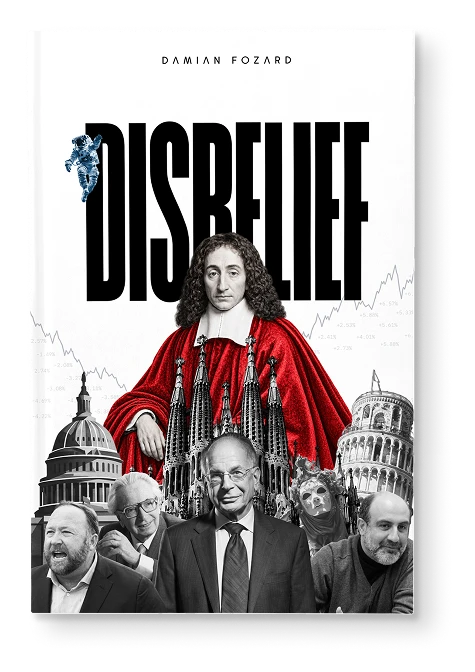
My book Disbelief is about belief itself – how we hold it, and how we ought to govern it in the parts of public life, like science, law, and government, that depend on evidence rather than doctrine. It argues not for disbelief over belief, but for an honest coexistence of the two, and for the discipline of remaining self-correcting. It is a philosophical book, but it comes from the same conviction as my scientific work: that wisdom begins with an honest account of the limits of what we know.
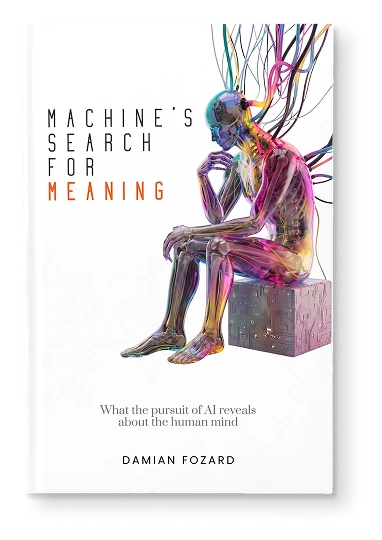
Machine’s Search for Meaning sits between my science and my philosophy, asking what the pursuit of artificial intelligence reveals about meaning and the mind. I write because the questions I care about do not resolve themselves in papers alone.
I come from a small island and a long line of people who built things from very little.
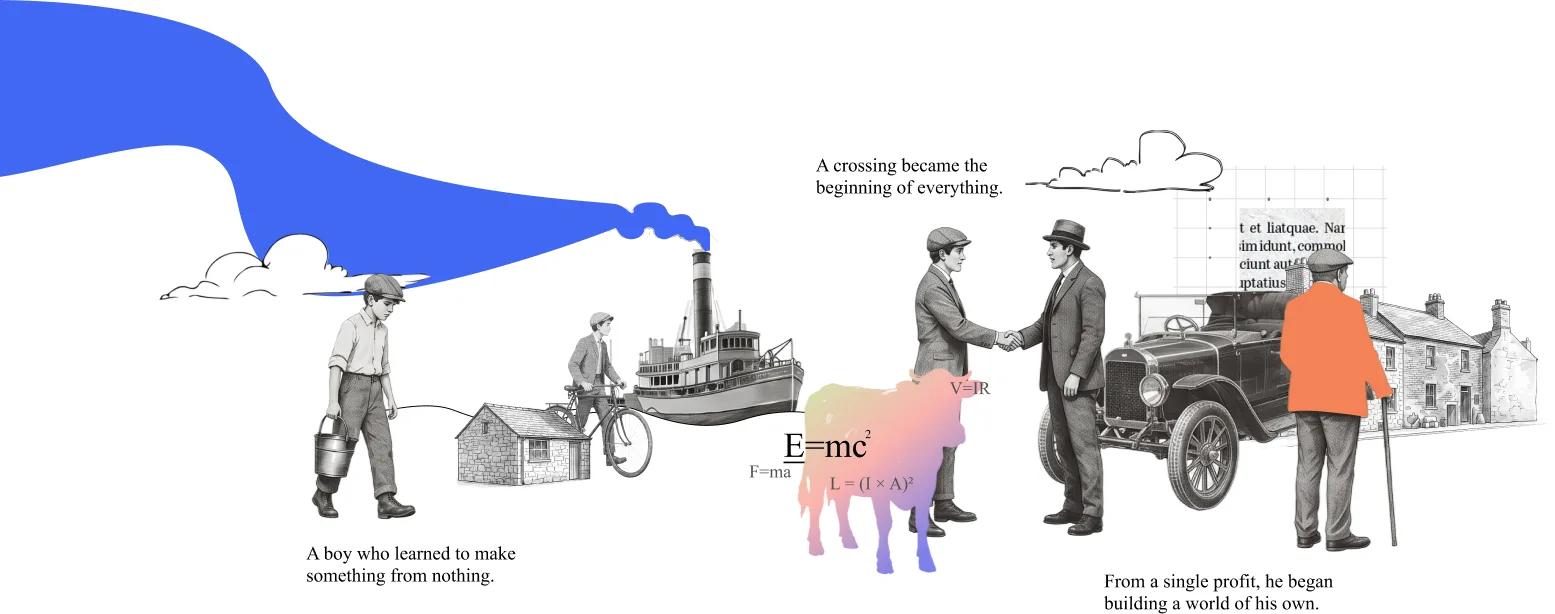
The first of them I really know about was my great-grandfather, William. He started with nothing – his father gone, his mother lost young, the children scattered. As a boy he was a farm laborer. But somewhere in him was an instinct I’ve spent my whole life recognizing in myself: he could see a way where there wasn’t one.
He saved enough to buy a bicycle, rode to the coast, took a boat to the Isle of Man, and on the crossing talked a farmer into selling him a cow on credit – which he butchered and sold the moment he landed. That was his first profit, made before he’d properly arrived anywhere. From it he built a life: farms and properties, the island’s first private telephone line, one of its first motorcars. He died still reaching for the last piece of land he wanted to own. I never met him, but I think I carry something of him – the conviction that you can begin with nothing and build something that outlasts you.
My grandfather was an incredible man, one who walked softly and carried enormous gravitas. As a young boy, it felt that the whole world bent around him. He taught me so much, especially playing cards. He owned the butchering business William had created and ran it successfully until he retired. My father didn’t want to become a butcher, and so Grandad, for their wedding present, bought my parents a hotel, which is where I both grew up and learned first-hand about the highs and lows of running a business. My family was devastated when my grandad died suddenly, not long after he retired. He left a void in my father’s life that I am not sure was ever filled. With my grandad gone, my dad involved me in the business.
I helped with keeping the books before I was old enough to understand what they meant. I learned early what it costs to carry something heavy, and I learned it beside him. In the late 1980s, the tourist industry on the island was dying, and hotels were changing from being sources of income to millstones. Fortunes, I came to understand, are not permanent: what one generation builds, another can struggle to hold. It is a lesson I never forgot, and one that has shaped how I’ve tried to build ever since.
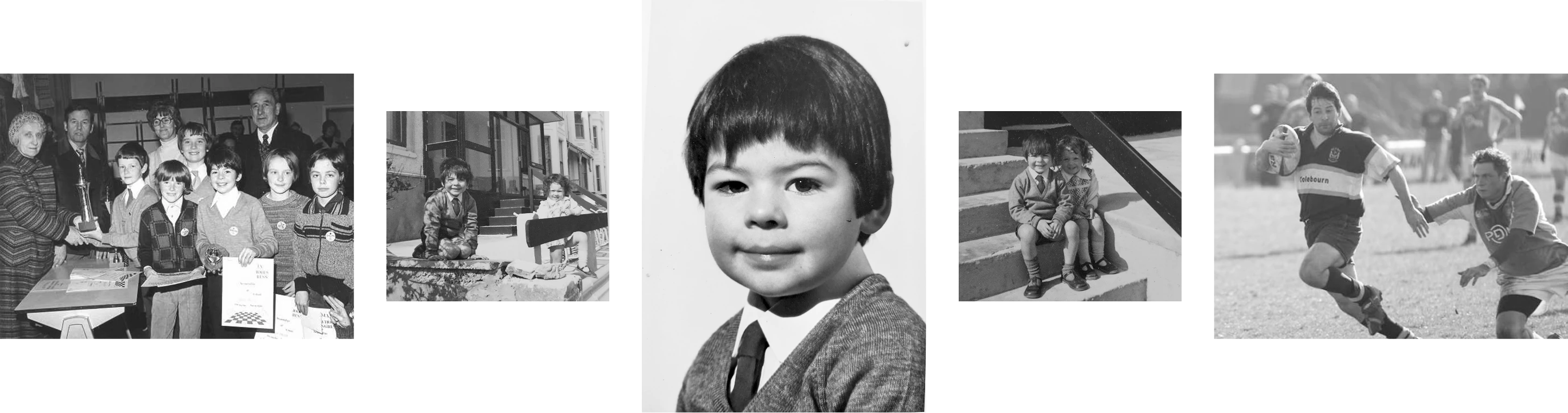
If my grandfather gave me belief, my mother gave me persistence. I was born unable to breathe properly – a sickly, asthmatic child whose lips would turn blue, who spent too much of his early life in hospitals and on the sidelines. My mother refused to let that be the whole story. On a doctor’s unconventional advice she put me in a swimming pool, then into athletics, and she stayed beside me through every setback when I had little natural talent to show for it.
My younger sister, a far better athlete than I was, used to win her own races and then run back to cross the line with me. Between the two of them I learned that a body can be remade, and that the limits you’re handed are not always the ones you have to keep. The boy who couldn’t breathe ended up trying out for England – in two sports.
The harder battle was on the page. I was quick with numbers and hopeless with words: severely dyslexic at a time when no one had a name for it, so I was simply treated as slow and sat with the younger children. It was humiliating, and for a while it nearly cost me my confidence entirely. What saved me was a tutor named Hendrick, who refused to teach me the way everyone else had. Instead of drilling me on sounds, he taught me how words are built – their architecture – and something clicked that never had before. He didn’t just teach me to read. He gave me a love of language that has never left me. I owe him the writer I became.
Chess was where I first felt capable. It was my refuge, and at ten I became the Island’s Schools Chess Champion – a small thing, except that it was the first time I had been good at something in front of other people. It also led me to the teacher who changed my direction: Dr. McSheffery, my mathematics master and a former chess grandmaster, who saw how my mind worked and put a computer in front of it. Before long I was writing and selling my own games. He showed me where I belonged.
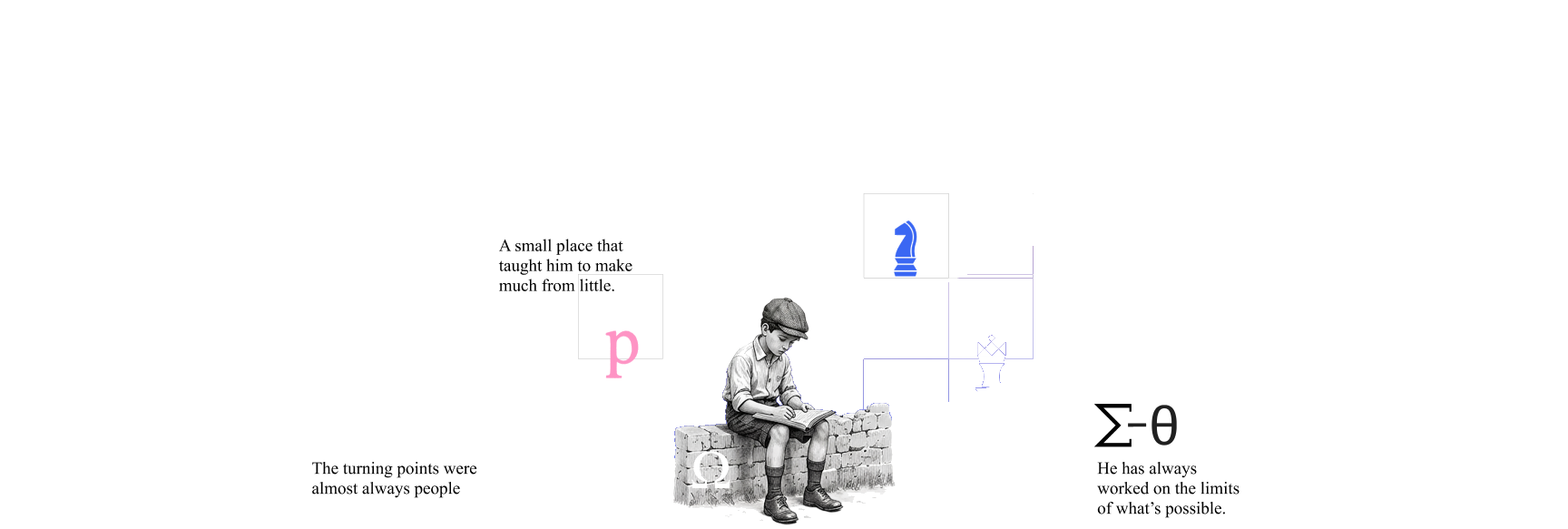
Looking back, I notice that the turning points were almost always people. A mother who wouldn’t give up, a tutor who found another way in, a teacher who saw something worth backing. People who, more than once, quietly bent the rules to keep me going when I was ready to walk away. I was not a prodigy who arrived fully formed. I was a difficult case that a handful of generous people decided was worth the trouble – and I have never forgotten it.
Under all of it was the Isle of Man itself: a small place that taught me how much a person can make from very little, and a place I still return to when I need to think.
I’ve come to believe that the through-line of my whole life is the question of limits – which ones are real, and which ones only look real until someone refuses to accept them. The asthmatic boy who made it to England trials. The dyslexic one who fell in love with words. A family that built from nothing, lost much of it, and built again. In one form or another, I have been working on the limits of what’s possible for as long as I can remember. I simply do it now with machines and mathematics, instead of a bicycle and a cow.

Join a thoughtful exchange of ideas on science, human nature, progress, and the questions that deserve deeper examination.