

The paradox of belief: Richard Dawkins, God, and the cognitive evolution of entropic feedback loops
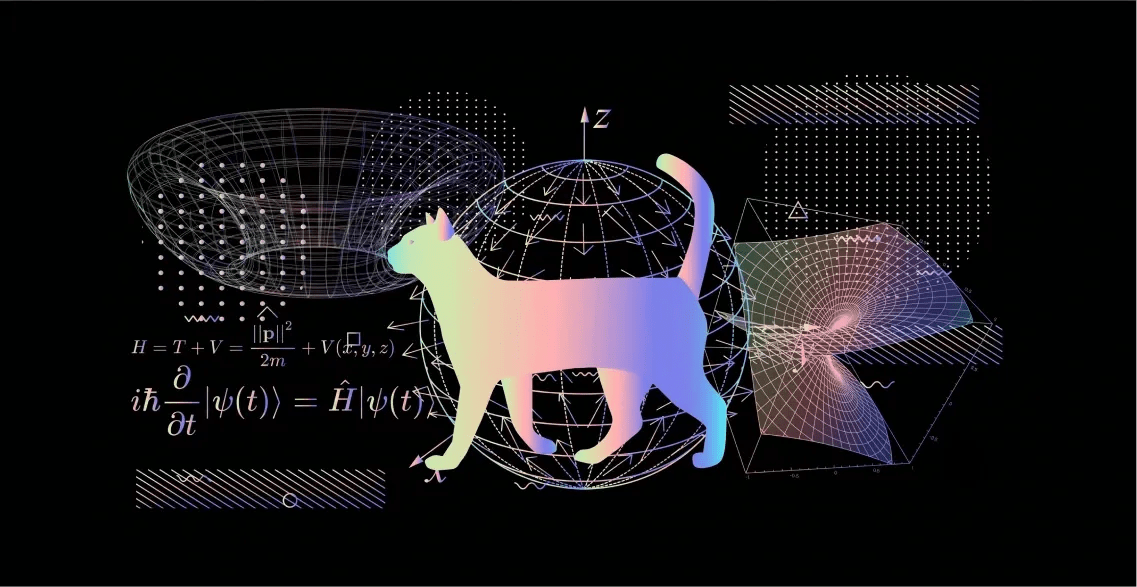
On the gap Dawkins asked about, what it is made of, and what it costs to fill it his way
Damian Fozard
There is a question I cannot close, and it sits at the limit of what I can imagine. I can conceive of the Big Bang; the mathematics and the pictures make a kind of sense, and I can hold the idea of a universe expanding from a point. What my mind will not do is go to the point before, where there is nothing: not empty space, because there is no space, and not a long wait, because there is no time in which to wait. My understanding of reality sticks there, at nothingness before something, and it has stuck there for as long as I have been asking. No piece of evidence I can imagine settles it and no refinement of the picture closes it. It is the kind of question this essay is about, and I put it at the front because I want to be plain that I have one, and that I have chosen to leave it open rather than to fill it.
Richard Dawkins gives the last chapter of The God Delusion a question for its title, A Much Needed Gap?, and it is the question that has stayed with me longest. Having spent the book arguing that belief in God is a delusion, a conviction held without evidence and against it, he turns in the final chapter to the uses of belief and treats them with more care than his reputation suggests. Religion, he writes, has been thought to fill four roles, explanation, exhortation, consolation and inspiration, and he grants the third. It is entirely plausible, he says, that the strong arms of God, even if purely imaginary, console in the same way as the real arms of a friend. His point is only that consolation is not evidence, and that even if belief were shown to be essential to human well-being that would not contribute the tiniest jot or tittle of evidence that it was true. Then he asks the question. Could it be that God clutters up a gap that we’d be better off filling with something else? Science, perhaps? Art? Human friendship? Humanism?
I have admired Dawkins for most of my adult life, and his work is the reason I came to think about belief at all. I do not use a God mechanism. I have done what he proposes, and built, over a long time, a philosophy of life rich enough to do the work that belief does for others. This essay is not an argument against him. It is an attempt to extend his question with the tools of Cognitive Information Theory, to say what the gap is made of, why it is there, why God was the first thing to fill it, and what it costs to fill it his way. The cost is the part he does not state, and I have paid enough of it to want to.
The Gap
Cognitive Information Theory, which I have set out in the primer The Three Faces of Information, treats a mind not as one optimiser but as many: a set of small specialists, each responsible for a slice of what the creature cannot be sure of, each raising the alarm when it meets something it cannot settle, and each connected to the others so that the alarm is heard and more of the mind turns towards the problem. The theory’s name for those specialists is entropic domains, and they are what it proposes as the structure a mind builds for handling entropy, the part of the world that will not resolve however long it is studied.
The domains grow with the sensors. The simplest creatures do no more than read the state of one sensor, light or no light, and act on it. As organisms acquire more sensors, the work of cognition migrates from evaluating a single sensor to evaluating a group of them, and then to evaluating what the groups have made. Darwin’s own example of the eye shows the sensor growing more elaborate, from a patch of pigment to a lens, and the mind behind the eye grew in the same way. We do not perceive each dot of light. We have domains that weave the dots into shapes, further domains that turn the shapes into labels, and further domains again that turn the labels into meaning, and each layer takes the uncertainty the layer below could not settle and does what it can with it. The architecture is present in outline in a bacterium and elaborated beyond recognition in a person, and the elaboration has a cost the architecture itself predicts.
For most of the history of life a creature’s uncertainty arrives from outside it. A mind deep enough to remember, to predict, to dread and to model other minds begins to generate uncertainty of its own, and that inward uncertainty compounds. An alarm raised by a question that has no answer does not fade. It goes on sounding, more of the mind turns towards it, and past a certain point the turning stops being attention and becomes a mind that cannot look away; the connections that were meant to hold the mind together begin to pull it apart. A mind that deep needs a mechanism to cap its own expansion, or it runs hot until it comes apart.
That is what the gap is made of. The deepest uncertainties a human mind generates have no resolution: why the child died, what happens at death, whether the harvest will come, what the people not in the room intend, whether a life has been well spent, what there was before there was anything. The theory names five things a mind can do with a question it cannot settle: hold it, improve its picture of the world, go looking for the evidence that would decide it, bring more of the mind to bear, or rebuild the structure that is failing. Against a question that cannot be closed the first four fail, and fail again, and the fifth is what remains. One form the rebuilding takes is a new domain whose job is to govern the ones already there. Dawkins’ gap is the place in a deep mind where that domain has to go.
The First Cap
Dawkins’ own account of the roots of religion is that it is a by-product, a misfiring of something useful, such as a child’s credulity or the instinct that reads agency into a rustling bush. I would extend the account rather than reject it. Religion is a by-product of something useful, and the useful thing is depth itself, the web of domains that made human beings capable of foresight, of modelling one another, and of asking the questions that cannot be answered. Belief in God is the governing domain that a mind of that depth built to manage the uncertainty it had begun to generate about itself. It takes in the unsettled questions of many domains at once, about the physical world, about other people, about the future and about what things mean, and it silences them by supplying an answer that cannot be checked and does not need to be. The child died because it was willed. The dead are elsewhere. The harvest is in other hands. The intentions of strangers are known to someone. A life is measured by a judge who is not in the room. Each of those closes a question that nothing inside the mind could close, and it closes all of them with a single structure, cheaply maintained, shared across a group and passed down without each member having to build it. Through ritual, moral code and doctrine the cap is externalised and distributed, so that the cost of maintaining it is spread across a whole society.
The ordering is the part that matters for Dawkins’ question. The dominant uncertainty a lineage faces migrates as its solutions create new problems, from the physical world to the social group to the imagined future to the meanings of symbols. God arrives with the symbolic, at the point where a mind can hold a story, and it arrives before the alternatives. Friendship as a governor of existential uncertainty needs a social web dense enough to carry it and a language rich enough to share the load. Art needs the capacity to build new structure under an uncertainty that will not resolve, the rarest of the mind’s responses and one that appears late. Science needs a shared method for gathering discriminating evidence and a tolerance for holding questions open across generations, which is the most expensive form of governance ever devised and is practised well by a small fraction of people even now. This is why belief persists despite everything science has shown. It is not clutter in the gap. It was the first thing that fitted it, and for most minds it is still the cheapest.
None of this is untrodden ground, and the account has neighbours it should name. Terror management theory, from Sheldon Solomon, Jeff Greenberg and Tom Pyszczynski building on Ernest Becker, holds that the awareness of death drives people towards worldviews and self-esteem that buffer the terror, and it has three decades of experiments behind it. The cognitive science of religion, in Pascal Boyer’s and Scott Atran’s hands, holds that gods are by-products of ordinary mental machinery, agency detection and the minimally counterintuitive idea that sticks in memory, and that religion is what those by-products look like once a culture organises them, which is close to Dawkins’ own account and was there before his. I accept both, and the domain framing adds two things they do not have. The first is that death is one unanswerable question among several, and the mechanism is the same for the harvest, the stranger’s intent and the question of whether a life was well spent, so a theory that starts from mortality alone explains one question where there are many. The second is that the by-product account says where the god-shaped idea comes from and not why it persists at such cost; the theory says what the idea does once it is installed, which is to silence the questions no part of the mind can close, and that function is why the by-product was kept.
Filling It His Way
Now to the question as Dawkins put it, and to what his answer asks of a mind. The alternatives he proposes share a property that God does not have. They do not close the question. Science holds it open and goes looking for evidence, which in the theory’s terms is exploration rather than closure. Art builds a structure in which an unresolved uncertainty can be held rather than one in which it is answered. Friendship distributes the load without settling it. Humanism, and the philosophy of life I have built for myself, are frameworks for carrying unanswerable questions well, not for making them go away. Every one of them replaces a cap with a discipline. Where the God domain silences the question, the rational response keeps it live and governs it, and that difference is the whole of the cost.
The cost is real and it is worth stating in the theory’s own terms. A question that is held open goes on asking, and past a certain point the asking becomes a mind that cannot look away; the rational mind has to carry unresolved uncertainty about death and meaning and the intentions of others without letting it take over every part of the mind it touches, which is a skill and not a gift. The cap is no longer shared. A religion distributes its governance across a community and hands it down ready-made, so that a child inherits the closure of a thousand questions at no cost. A philosophy of life is built by one person, over decades, and is not inheritable in the same way; each mind that declines the ready-made cap has to construct its own.
The energy is higher. Rationalism demands consistency, tolerance for ambiguity and continuous attention, and the human mind evolved to minimise the expenditure of governing itself, not to maximise it. I have spent a long time on my own version of Dawkins’ answer, and I would not trade it, and I can report that it is more work than belief and that the work does not end. Dawkins is right that the gap can be filled with something better. He does not say that the something better is a standing expense where God was a one-time purchase, and the omission matters, because it is why his argument persuades the people who can afford it and slides off the people who cannot.
The Beginning of an Age
Here is where I would carry his thinking one step further than he took it. Minds evolve, and not only by descent. The web of domains that a person runs is shaped by the culture that fills it, and cultures change faster than genes. For almost the whole of human history the God domain was the only cap available for the deepest uncertainties, and every society built one. In the last few centuries, in some places, a second option has appeared: to hold the hardest questions open, to explore them rather than close them, and to build the discipline that makes the holding bearable. Dawkins is one of the people who made that option articulate. My hypothesis, and it is a hypothesis rather than a finding, is that this is the beginning of an age in which human minds evolve to replace the God domain with a rational one, a governor that keeps the hardest questions open and builds the structure to hold them, rather than one that closes them, and that recognises the intellectual cost of doing so as a cost worth paying.
The paradox of the title lives in that transition. The depth of mind that makes a person capable of science, art and friendship is the depth that generated the uncertainty God was built to cap, and the alternatives are children of the construct they would replace. A mind cannot take the second option until it has been built by cultures that ran on the first. Nor is the transition guaranteed, because the theory that predicts the God domain also predicts what happens when a cap is removed and nothing is put in its place: the questions run on, they pull in more and more of the mind, and the mind or the culture runs hot. A society that discards belief without building the discipline has not become rational. It has become uncapped, and much of what looks like modern anxiety is, on this account, exactly that.
Two objections belong here, and both are strong. The first is that the God domain is not the bargain I have made it sound. Hell adds an uncertainty of its own, whether one is saved, that no evidence can close; scrupulosity, the believer who cannot stop checking, is the cap generating the very uncertainty it was built to silence; and the history of religious melancholy is long. I accept it. The cap is cheap on average and ruinous for some, and the theory predicts this, because a governing domain that closes questions by fiat can also open them by fiat.
The second objection is the more uncomfortable. If discarding belief without building the discipline leaves a culture uncapped and running hot, the least religious societies on earth should be the most anxious, and the Nordic countries are among the least religious and the least anxious societies ever measured. That is not what my account predicts, and I have to change it. What those societies show is that the discipline can be inherited after all, not through doctrine but through institutions: trust in strangers underwritten by a state, a safety net that closes the harvest question, a public culture that holds the hardest questions open without shame. The cap was replaced not with an individual philosophy but with a shared one, distributed and handed down, which is exactly what religion was good at. The running hot I described is the condition of a person or a society that loses the cap and inherits nothing in its place, and that is a narrower claim than the one I made a paragraph ago.
The domains of human life that should be governed by evidence rather than doctrine, science, law and public reason among them, are the subject of Disbelief, and nothing here retreats from that argument. What this essay adds is the bill, and the position it leaves me with is this. Dawkins asked whether God clutters up a gap better filled with something else, and the answer is yes, for a mind that can afford the filling. The filling is a discipline of holding the hardest questions open, and it costs more than the cap it replaces, because a cap closes a question once and a discipline has to be kept up. It can be inherited, as the Nordic countries show, but only from a society that has built it into its institutions and goes on paying for it; where no such society exists, each mind that declines the cap must build the discipline alone, over a lifetime, and the work never finishes. Belief in God may be the most efficient mechanism the human mind ever devised for governing its own depth. That it is not true is Dawkins’ argument, and I share it. That what replaces it costs more, and that the cost is the price of a mind that would rather explore its uncertainties than close them, is the extension I would offer him, with gratitude for the question. The one I opened with is still open. I expect it to stay that way, and I have come to think that keeping it open, rather than answered, is what I bought with the expense.
More essays

The terrible job
Your first question

The evolution of complexity, entropy, and ambiguity in a perception system
What sport actually teaches

What AI reveals about human sentience, free will, and creativity

Assessing the Suitability of a Problem for AI

Entropy, ambiguity, and the evolution of the human mind
AI interviews well

The rise of AI consumerism: Living in a world of invisible algorithms

The mathematical principles of information

The future of AI and the path to artificial general intelligence
