

Domains of Disbelief
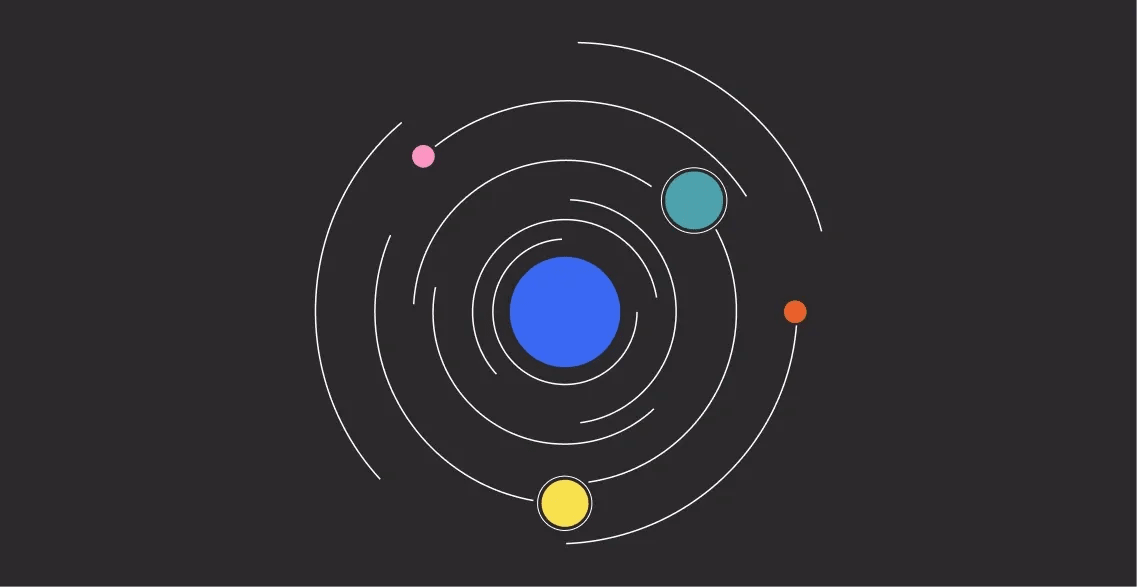
On the places, public and personal, where no belief is allowed to outrank the reasons that can be shown
Damian Fozard
The Canals of Mars
In 1877 the Italian astronomer Giovanni Schiaparelli looked at Mars through the best telescope of his day and saw thin lines crossing the planet’s surface. He called them canali, channels, a neutral word for a natural feature. In English the word arrived as canals, which is not neutral at all. Canals have builders.
For the next 40 years respectable astronomers mapped the canals of Mars in loving detail. The American Percival Lowell built an observatory in Arizona largely to chart them, and published maps of an irrigation network built, he argued, by a dying civilisation husbanding its last water. Then the telescopes improved, and the network was simply not there. It had been the work of the mind’s own pattern-making, drawn out of optical smearing at the limit of vision and helped along by expectation.
What matters most is what happened next. There was no schism, no war for the soul of astronomy. The better evidence arrived, the belief died, and the maps were redrawn, demonstrably nearer the truth than before. That is what it looks like when a part of human life is run as a domain of disbelief. A domain of disbelief is not a domain of perfection. It is a domain of ever-improving correctness.
The Space Between the Planets
I hold that the freedom to believe matters more than the content of any belief, and that every person has an equal claim to it. That position leaves a hard question. If no private conviction may be imposed on anyone else, how does a society of eight billion private convictions run anything shared? One distinction has to come first: equal freedom for believers does not make their beliefs equally supported by evidence. People are equal; claims are not. The task is to honour the first truth without surrendering the second, and the answer is not to rank the beliefs after all. I picture the beliefs as planets, whole worlds, each with its own gravity and weather and inhabitants who love it. The domains of disbelief are the space between them, kept clear, not of believers, but of any belief’s authority, precisely so that every planet can keep its orbit without colliding with the others. The emptiness is not a rival planet. It is what makes the planets possible.
A domain of disbelief is an area of shared life where two conditions hold. Everyone is treated equitably there, with nobody’s private belief counting for extra, and nothing is accepted solely because an authority, a tradition, a majority or a sacred text asserts it; decisions rest on publicly stated reasons that anyone can inspect and challenge, and every conclusion stays open to correction. Better to hold a few such domains firmly than to claim many and hold none. Science is the one just seen. Three more matter most, and then there are the domains nobody legislates.
Law
Law is the sharpest case, because law is loaded. In September 2022 a 22-year-old woman named Mahsa Amini died in the custody of Iran’s morality police, arrested over how she wore her hijab. In the protests that followed, a 23-year-old named Majidreza Rahnavard was convicted of moharebeh, enmity against God, on the strength of a confession that rights organisations described as coerced, after a trial without a real defence, and publicly hanged from a crane within a month of his arrest. That is what law looks like when a belief system is embedded all the way down. The crime itself is defined inside one faith, and citizens outside that faith are judged by obligations they never recognised. Gentler versions of the same embedding appear wherever a law adopts one belief’s definition of anything, marriage, blasphemy, modesty, the sabbath, and each one diminishes every citizen who defines it differently. A court must be a place where your beliefs and the judge’s beliefs are equally irrelevant, or it is not a court. It has become an arm of one belief system, with sentencing powers.
The problem is not that lawmakers hold beliefs. Nobody arrives beliefless, and religious traditions have given the law some of its best ideas, from sanctuary to the civil-rights movement. The test is narrower. Can the law be defended in terms available to citizens who do not share the lawmaker’s faith? A legislator may vote her conscience. What she may not do, in a domain of disbelief, is pass a law whose only justification is that her scripture requires it.
The Myth of the Mandate
Governance is where the believing is best disguised, so it deserves the questions I ask of every other seller of belief: what do they need believed, and who benefits? What they need believed is that winning an election confers a mandate, the people’s blessing for whatever follows. An election lawfully grants a government temporary authority to pursue its published programme, within constitutional limits. The myth begins where that authority gets dressed up as the unanimous voice of the people. Boris Johnson’s 2019 “landslide” rested on about 44 per cent of the votes cast, under 30 per cent of registered voters and roughly a fifth of the population; each figure is true, and which one a speaker reaches for tells you what they need believed. No American president has ever been chosen by a majority of those eligible to vote. In most electoral systems, most of the time, more eligible people did not choose the winner than did. Not choosing is not opposing, and I do not claim the abstainers as dissenters; the claim is narrower. The mandate is a belief about what the numbers mean, held by the winners and pressed on everyone else, and it belongs in the domain of disbelief with every other belief about what a count of hands proves.
Who benefits is plain enough. The myth converts a plurality into power, and silences those who never consented by telling them the people have spoken. Democracy’s real genius was never the mandate. It is the virtue the myth obscures, the peaceful and frequent transition of power. It matters less who is in power than that they will, at some point, and without bloodshed, be out of it.
School
Imperial Japan showed what schooling becomes when a belief system runs it: children taught gratitude to a living god, and then aimed. Finland shows the alternative passing its own test: children set to write fake news in class so that they will recognise it, a curriculum that invites doubt of the curriculum, and survives it. A school is a domain of disbelief when what it teaches could survive its own lessons, when children are handed the tools of checking and the tools are warranted for use on everything, including the school. Schools founded in a faith vary enormously, and many hand their pupils real tools. The line is the same one drawn everywhere else in this essay: an institution whose first purpose is to propagate the belief that funds it is serving two masters, and the pupils come second. Every child, of every family, in every belief, is owed the tools. That is what treating everyone equitably means when the everyone is seven years old.
Your Own Domains
That is the public map. The part no parliament can do for anyone is the private one. If a society needs zones kept clear of belief so that its beliefs stay honest, so does a person, and I am as crowded a planet of convictions as anyone, most of them installed young, few audited since. A personal domain of disbelief is an area of one’s own life where one appoints oneself the sceptic, permanently, and holds one’s own beliefs on the probation the astronomers hold their canals.
I have declared two, and I chose them where the cost of being wrong is highest. The first is money. I have spent 30 years being priced on belief and pricing others on it, and the question I now ask of any price, before paying it, is how much of it is made of belief, however glowing the prophet and however many others are buying; I have written about that arithmetic in The Belief Quotient. The second is my own theories. In the epilogue of Disbelief I describe building an entire argument about Catholic family size, a tidy theory in which belief did the explaining, and then finding that the data would not carry it. I had the choice every believer has at that moment, to keep the theory and doubt the numbers, and what stopped me was only that I had promised myself the theories would stay on probation and could not now make an exception for the one I liked best. The theory went. The chapter was better without it.
The domain I find hardest is my certainties about other people: the friend I have decided is against me, the parent I have decided cannot change, the classmate filed years ago under one story. Disbelief opens with a 17-year-old pilot, Takao Adachi, whose farewell letter, written the night before his suicide sortie in the last months of the war and asking his family to be glad, could carry two stories at once, a boy who believed every word and a boy who knew his officers would read it, and the lesson has not changed. The one story is usually too simple. People are the domain where ever-improving correctness costs the most pride, and pays the best.
I cannot hold all of them at once, every day. The discipline is smaller and permanent: knowing which domains I have declared, and, inside them, not letting a belief, especially my own, especially a comfortable one, sleep unexamined for years. The wartime Japan that schooled that pilot had no domains of disbelief at all. That was the whole design. The private ones are drawn on purpose or not at all.
The Higher Bar
What this essay asks for, in the end, is not the removal of belief from life, which nobody could manage and nobody should want. It asks for places, public and personal, where no belief, however senior, outranks the reasons that can be shown, and the part nobody warned me about is whose beliefs are hardest to keep out of them: my own. A disbeliever is not someone who believes nothing. A disbeliever is someone willing to defend the equality of belief for everyone, not just themselves, and the bar for that sits higher than for any believer, because it requires recognising the moment when your own belief is the problem, and setting it down. Pascal, the great auditor of premises, who checked Aristotle with a barometer and the gamblers with mathematics, checked everything in Europe except the record of his own conversion, a night of religious ecstasy he wrote down on a scrap of parchment and kept sewn into the lining of his coat, unread by anyone else until he died. The coat is the last domain, and the hardest to keep clear.
I have not kept it clear myself. While writing Disbelief I caught my own beliefs asleep on duty more than once, and there is no reason to think I caught them all. The question I am left with is the one nobody can answer from the outside: which belief am I carrying, sewn into the lining and unread, right now? I do not know, and I would distrust anyone who said they did.
More essays

The terrible job
Your first question

The evolution of complexity, entropy, and ambiguity in a perception system

What sport actually teaches

What AI reveals about human sentience, free will, and creativity

Assessing the Suitability of a Problem for AI

Entropy, ambiguity, and the evolution of the human mind
AI interviews well

The rise of AI consumerism: Living in a world of invisible algorithms

The mathematical principles of information

The future of AI and the path to artificial general intelligence
